
Geological Tactile Image Repository
A digital resource collection of tactile graphics for geoscience education.
Overview
Welcome to the IAGD’s digital resource collection of tactile graphics for geoscience education.
Why this resource collection?
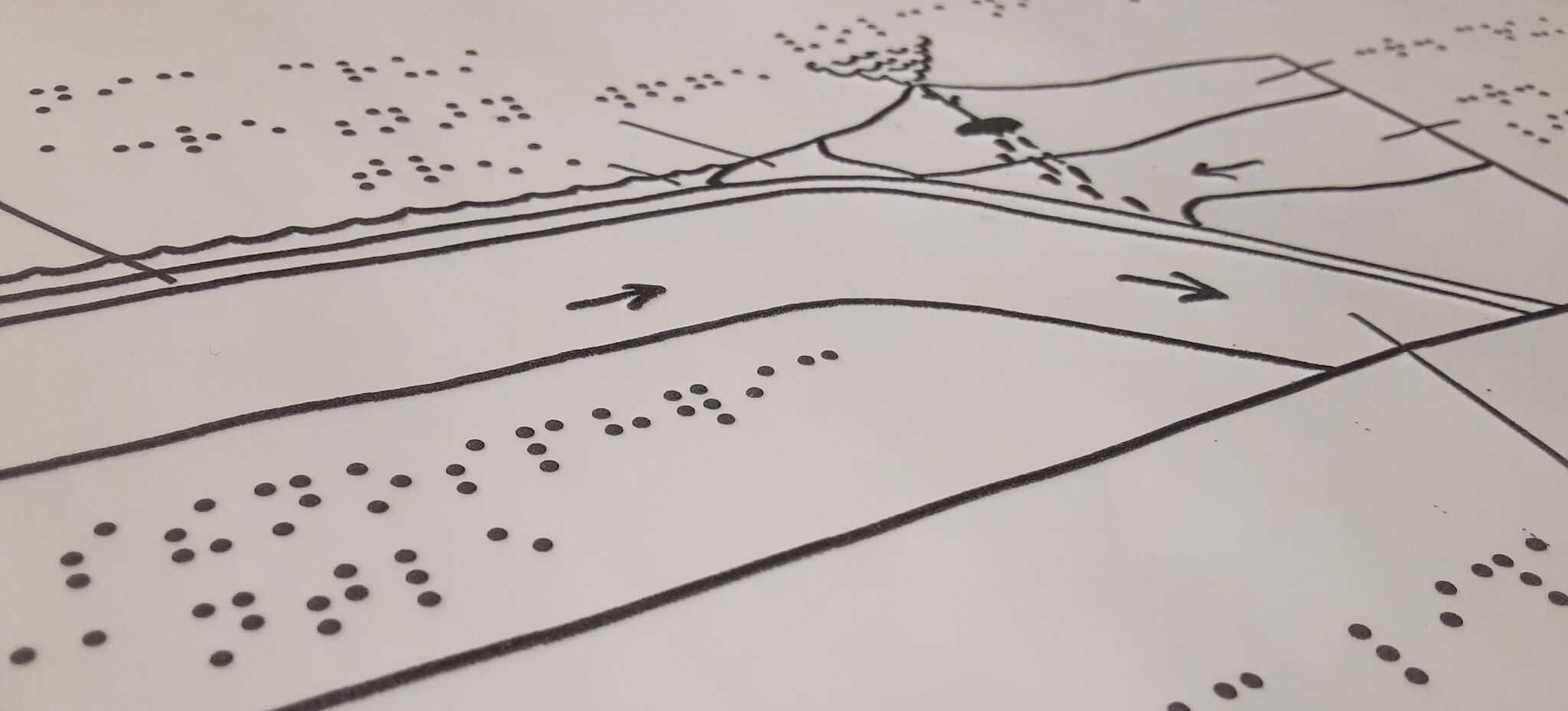
Geology is a visually-stimulating science that presents significant challenges to students with visual disabilities and their instructors. Too often, instructors of low-vision students have to create their own tactile graphics, and this usually requires a significant investment of time and effort. This digital resource collection was designed to supply instructors with ready-made graphics that can be rapidly converted to tactile graphics using technology commonly available at their institution’s disability office. We hope it is helpful to you!
Who can use this resource collection?
This digital resource collection is freely available for the use of geoscience educators at high schools, colleges, and universities who need quick and easy access to tactile graphics illustrating a range of topics covered in introductory geoscience courses.
What information is included in this resource collection?
Each image in the collection is included as a PowerPoint (.pptx) file which can be modified for customized use and as an Adobe Portable Document Format (.pdf) file which cannot be as easily modified. Each of these files contains three pages:
- The graphic with accompanying text and labels in English
- The graphic with accompanying text and labels in Grade 2 (contracted) 24 point Braille
- The graphic with no accompanying text or labels
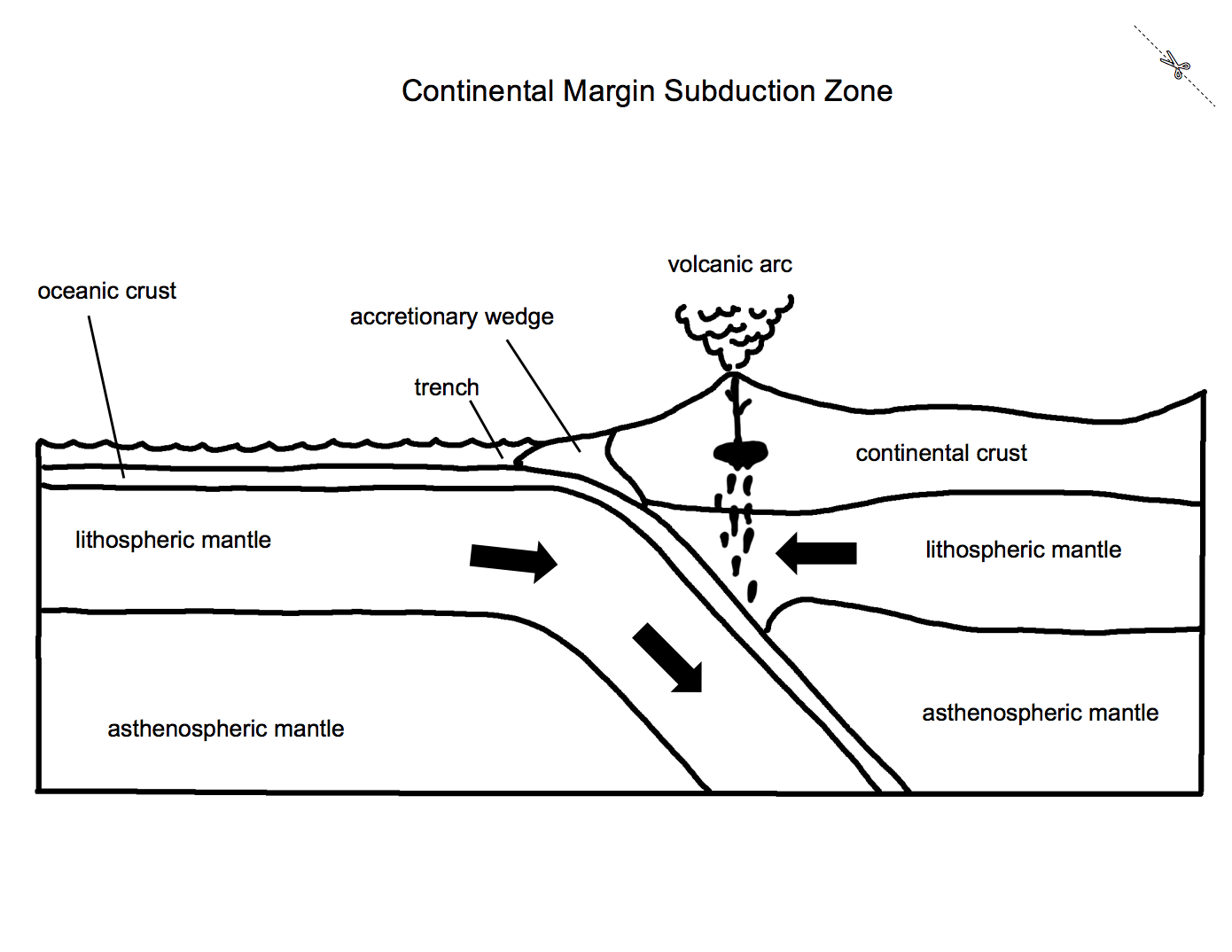
Graphic with text and labels in English 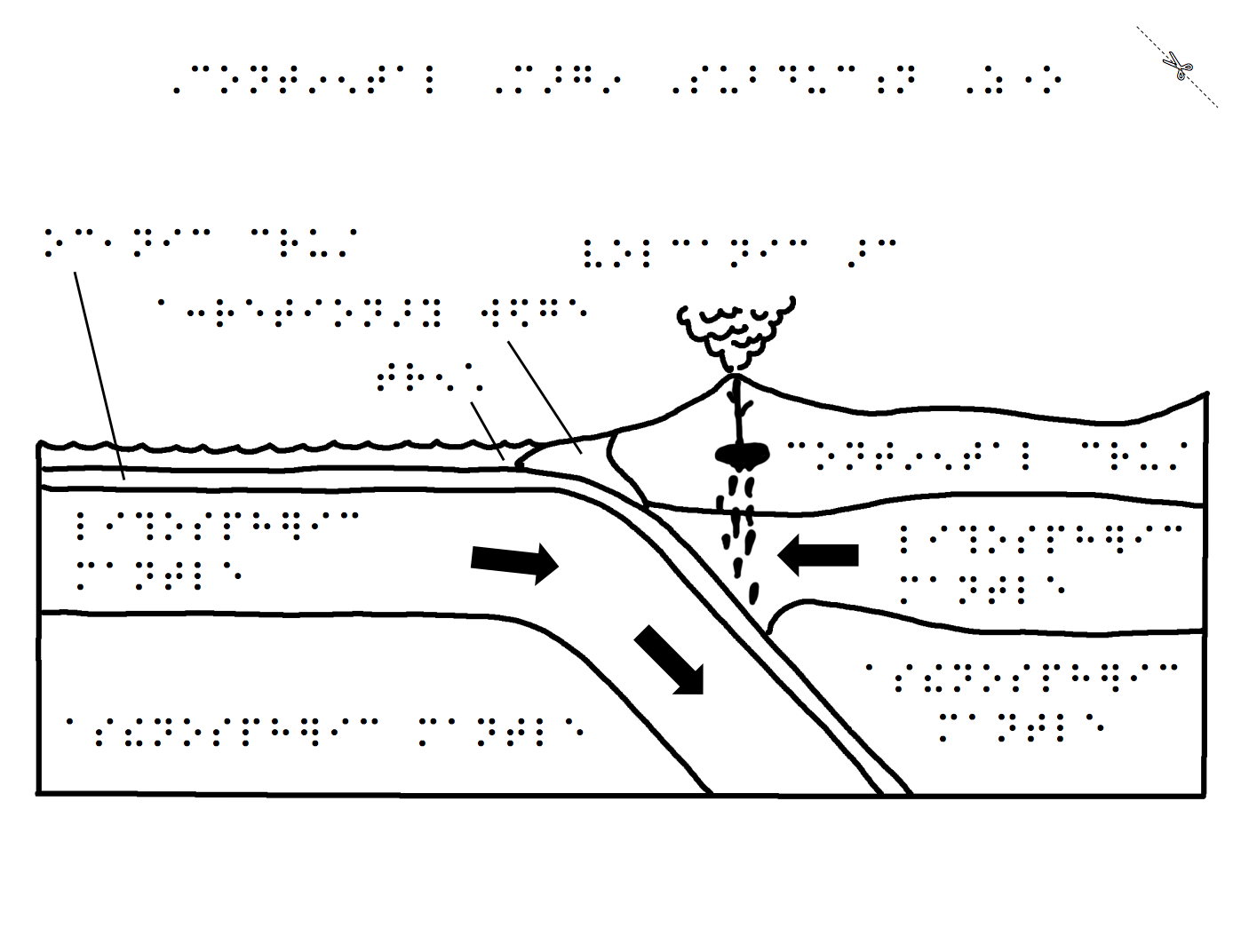
Graphic with accompanying text and labels in Grade 2 (contracted) 24 point Braille 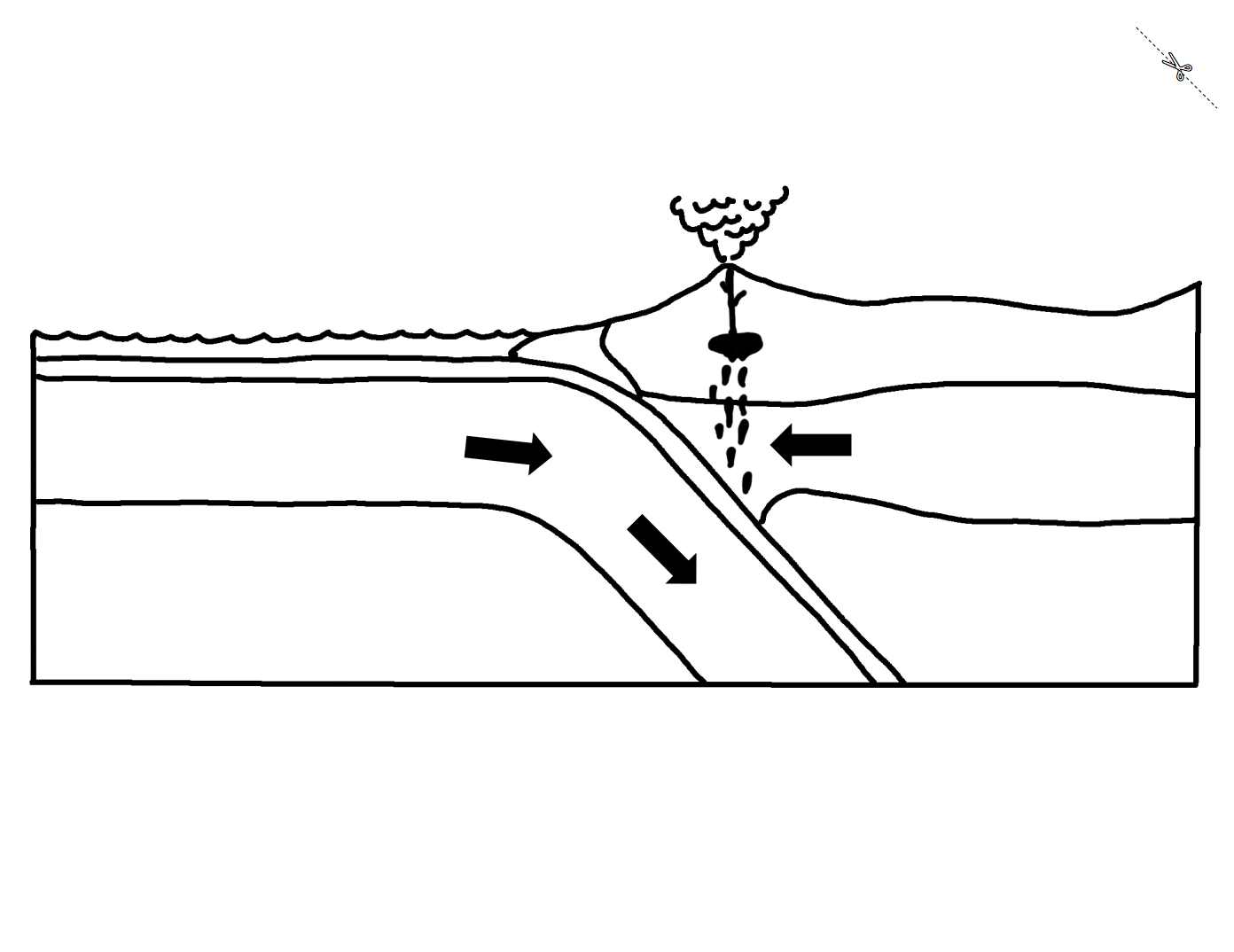
Graphic with no accompanying text or labels
What equipment is required to edit, print, and use these tactile images?
Editing the images
To edit the ppt images in this resource collection, the following resources will be useful: an online Braille translator, such as https://www.brailletranslator.org or https://www.branah.com/braille-translator. We recommend Grade 2 (contractional Braille) Swell Braille font is the recommended font for tactile graphics produced by the method described below.
Printing the images as tactile graphics
The images in this resource collection must be printed out on thermal capsule (or “swell”) paper (8.5 x 11 sized paper is the best size for the images in this database). Your institution’s disability office may have capsule paper available to use, but if they do not, here are a few vendors:
- http://piaf-tactile.com/tangible-magic-paper/
- http://www.americanthermoform.com/product/swell-touch-paper
- https://store.humanware.com/hus/tangible-magic-capsule-paper-8-in-x-11-in-100-sheets-package.html
- https://www.enablemart.com/swell-touch-paper
- https://www.maxiaids.com/swell-touch-paper-85-x-11-in-100-sheets
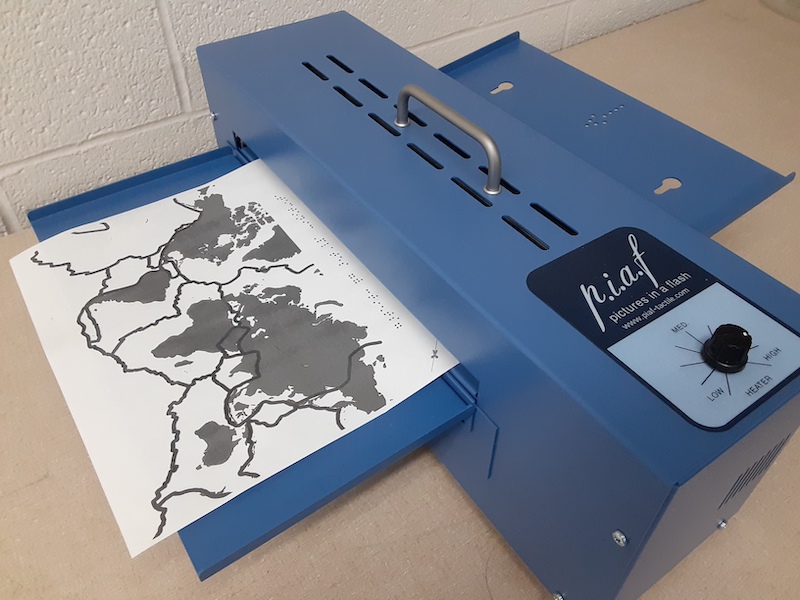
The graphic must first be printed directly on the swell paper before it is passed through the PIAF machine. Dark areas containing carbon are activated by heat within the PIAF machine and expand producing a raised area on the paper. In our experience, images printed with toner-based laser printers produce a much better result with the PIAF than those produced with inkjet printers.
Next, the thermal capsule paper with the image on it must be passed through a machine that heats the paper to produce the raised relief. Again, your institution’s disability office may already have one, but if they do not, here are some vendors:
- HARPO PIAF (“Pictures in a Flash”) printer and manual
- Swell-Form Graphics II Machine
Funding and Support
This project was funded by a grant from the American Geophysical Union as part of its "Celebrate 100" grant program.
Contact
Please contact Kent Ratajeski (kent.ratajeski@uky.edu) or the IAGD for more information about this database or if you have any questions about its use. This resource welcomes your feedback and constructive comments. Please let us know of any errors that need correcting. We are currently making revisions to the Braille text for some of the graphics already posted, and we expect those updated graphics to be made available by early March, 2021.
Source code
Source code for this project is available on GitHub at https://github.com/the-iagd/geological_tactile_image_repository.